We use cookies to improve your experience and our business. See our privacy/cookie policy or continue browsing to accept our use of cookies. View our cookie policy.

Do I Need an Air Vent for a Wood-Burning Stove?
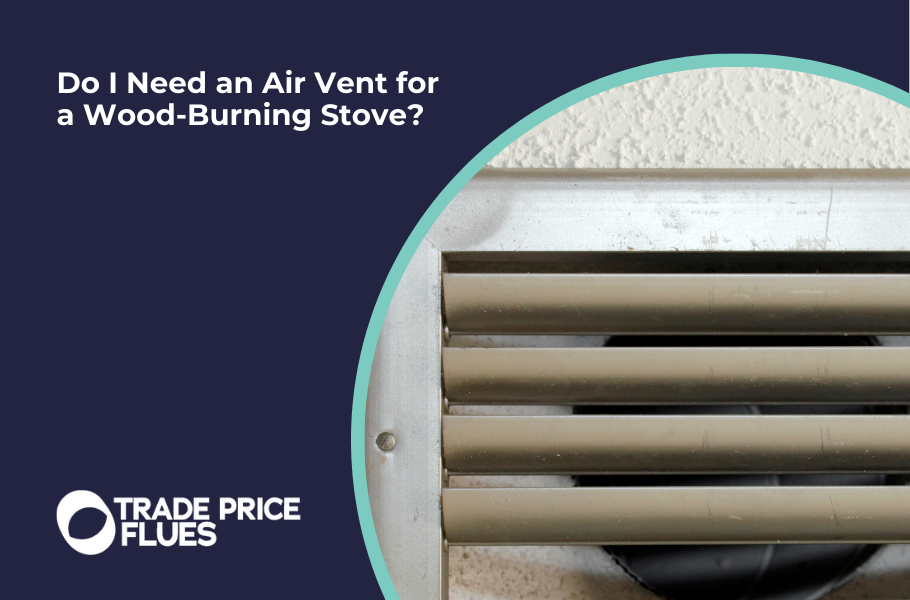
Proper ventilation is one of the most important considerations if you’re considering installing a wood-burning stove in your home. You’ll need to provide an adequate air supply to the stove to allow for proper combustion and ventilation of smoke and gases up the chimney. This brings up a key question—do you need an air vent for a wood-burning stove?
The short answer is, in most cases, yes. Building regulations in the UK require an air vent in the same room as a wood-burning stove, with some exceptions. Read on to learn more about the purpose of stove air vents, sizing guidelines, installation tips, and what to do if you don’t want a visible wall vent.
Why you need a stove air vent

The primary purpose of a dedicated air vent for a wood-burning stove is to replace the air exiting your home through the chimney. As the stove burns, it uses oxygen while smoke and combustion gases exit the chimney. This can create a vacuum effect, drawing air out of the room faster than it can enter through cracks and gaps in walls, windows, and doors.
Without an air vent, the vacuum effect could lead to a few serious problems:
- Smoke may exit the stove’s air vents rather than go up the chimney, which could fill the room with dangerous smoke and combustion gases.
- Without proper combustion airflow, the stove will not burn efficiently or generate as much heat.
- Chimney draw will be weakened by insufficient air supply, increasing the risk of smoke spillage or leaks.
The consequences can be especially severe in modern, well-sealed homes. Newer builds are designed to be energy-efficient, with minimal air gaps. This also makes them more vulnerable to becoming deprived of oxygen. For this reason, building regulations state that newly constructed homes must have a permanent air vent installed in the same room as a wood-burning stove or other solid fuel heating appliance.
Read more: The Causes of Chimney Downdraft and How to Prevent It
Guidelines for stove air vent sizing
Building regulations provide exact specifications for determining the minimum size of air vents for wood-burning stoves:
- The air vent must provide at least 550 square mm of open aperture area per kW of rated heat output from the stove.
- For example, a 5kW stove would need 550 x 5 = 2750 square mm of open vent area.
- As a handy reference, a UK 50-pence coin has an area of approximately 594 square mm. So, for a 5kW stove, you’d need about five 50p-sized holes.
- An open square hole measuring 3 x 2 cm provides square mm.
For homes that aren’t newly built, there’s a bit more flexibility in the air vent requirement:
- In existing homes that are not considered airtight, the first 5kW of stove output is exempt from needing a vent.
- For example, if you install a 6kW stove in an older home, you only need enough vent for 1kW or 550 square mm.
- A 7kW stove would need 1100 sq mm, and so on.
- Homes built before 2008 are generally in this exempt category unless they’ve been modified to be more airtight.
One exemption is if the stove has a draught stabilizer – in that case, the vent sizing regulations differ, so be sure to research the specific requirements.
Read more: What Sort of Air Vents Do I Need for My Stove or Fireplace?
Tips for stove vent location and installation
When installing your stove’s air vent, keep these tips in mind:
- Avoid locating the vent where the incoming airflow would blow directly on your usual sitting area or where pets sleep. Think about the path air will take from the vent to the stove.
- If you have a suspended wooden floor with a ventilated space underneath, you can install a vent through the floor into this cavity.
- For stone or rubble walls, which are difficult to drill into, you can remove a small window pane and install a vent. Converting an old cat flap or drilling smaller holes are other options.
- Building regulations allow the use of trickle vents for stove air supply if they can be fixed permanently. However, they must not have fly screens as these restrict airflow.
What if you don’t want an air vent?
Some homeowners don’t like having a visible wall vent installed in their living space. If you want to avoid this, but your stove requires an air vent, here are a few options to consider:
- Select a stove model with an integral air supply. Some have a pipe that draws combustion air directly from outside, so no wall vent is needed.
- Test your stove’s performance with an exterior window or door open. If this noticeably improves burner combustion and heat output, your home needs more air coming into the room with the stove.
- Going ventless may limit your stove options and involve some trade–offs—be prepared for potential impacts on efficiency and chimney draw.
Providing an adequate air supply with a dedicated vent is crucial for wood-burning stove safety and performance. Based on extensive research and expertise, follow building regulations for your region. For most homes, the vent sizing guidelines provide a good rule of thumb for proper ventilation.
With careful planning and installation, your new wood-burning stove will provide cosy, reliable heat. Ensuring sufficient air intake will keep it burning clean while avoiding a smoky, suffocating living space!