We use cookies to improve your experience and our business. See our privacy/cookie policy or continue browsing to accept our use of cookies. View our cookie policy.

Wood-Burning Stove Air Gaps: A Step-By-Step Guide
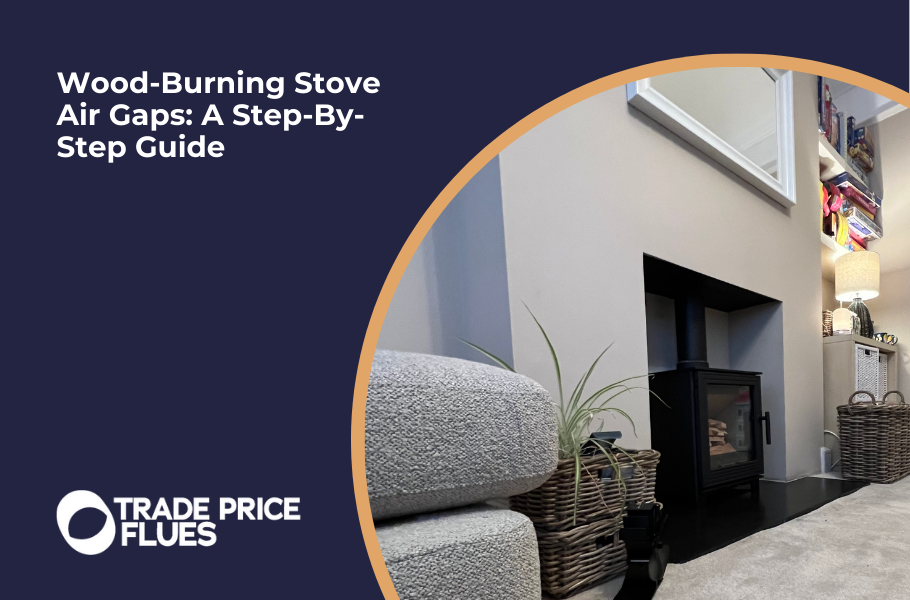
Installing a cosy wood-burning stove can be a satisfying DIY home project. However, leaving sufficient air gaps around your stove is crucial for safety and heating efficiency. Follow this step-by-step guide to learn about proper clearances and achieve a safe and stylish wood-burning stove installation.
Why air gaps matter

Air gaps, or clearances, around your wood burner serve two essential purposes:
Allow proper air circulation and heat transfer
Adequate airspace allows convection currents to flow around the stove, circulating heat into the room. Without gaps, heat could be trapped around the stove and fail to warm the space.
Prevent overheating and fires
Insufficient air gaps can lead to overheating nearby walls, floors, mantels or ceilings. Overheated, non-combustible surfaces like brick or stone may discolour, crack, or crumble. However, overheated combustible materials like wood framing present a significant fire hazard.
It’s clear that wood-burning stove air gaps are necessary for safety and heating efficiency. But what exactly are proper clearances? Let’s look at the factors involved.
Manufacturer guidance
Your wood-burning stove’s instruction manual will suggest minimum air gaps, usually around 2 to 6 inches on the sides. Follow the manual specifications whenever possible, particularly if they exceed building code minimums.

However, manufacturer guidance is only a legal recommendation when clearances involve non-combustible surfaces like brick or stone. Still, manual specs provide excellent direction to prevent surface damage or discolouration. Consider adjusting your design if you can’t meet the recommendations.
Building codes
Local building codes dictate the legal minimums for clearances to combustible materials like wood framing or panels. These mandated wood-burning stove air gaps are much more significant, usually 12 to 18 inches on the sides. Building codes don’t regulate gaps for non-combustibles.
Some building inspectors treat manufacturer manuals like gospel. Know both your codes and manuals thoroughly. Only building code rules are legally binding, but you may need to negotiate with your inspector, especially if gaps fall between the code minimums and manual recommendations.
Clearance considerations by material
The clearances needed depend partly on what materials surround the stove.
Brick or stone
Brick and natural stone won’t combust, so they can legally touch the stove body. However, direct contact may damage the finish or discolour the surface without an air gap as a buffer. Follow manual guidance for non-combustibles.
Cement board
A cement backer board is considered non-combustible, but the adhesive binders can deteriorate under high heat. To prevent cracking, leave a 4-5 inch gap behind and alongside.
Wood mantels
Combustible mantels require more significant gaps above the stove – usually at least 8 to 12 inches. The extra height prevents excessive heat exposure to the wood. Wider side gaps are also wise.
Tile, metal, or glass
Tile, metal, and glass won’t burn, but they can discolour, warp or crack without adequate air circulation. Consult your manual recommendations for non-combustibles.
Convector vs. radiant stoves
Convector stoves circulate heat via internal chambers, so their exterior surface stays cooler than that of single-walled radiant stoves. Thus, convector stove manuals may specify smaller side gaps in some cases.
Step-by-step installation guide
Now, let’s walk through wood-burning stove air gaps during installation, step-by-step. Follow this guide together with your stove manual and local building codes.
Step one - Design your stove alcove
- Sketch your stove recess with actual dimensions before construction.
- Research and purchase your stove first to obtain the manual with gap requirements.
- Plan gaps that meet or exceed manufacturer guidance and building code minimums for combustibles. Remember, more space is safer and feasible.
Step two – build your stove alcove
- Construct the alcove with framing/materials to allow your planned air gaps.
- For tight spaces, bring the stove body partially outside the alcove.
- Or, use rear elbows to offset the stove from the back walls.
Step three – Install cement board
- Line the entire alcove with a 5/8 inch cement backer board if needed for fire rating.
- Leave a 4-5-inch gap between the cement board and the planned stove location.
Step four – Install the stove
- Place the stove according to your pre-planned clearances.
- Confirm air gaps meet building code minimums for combustible surfaces.
- Recheck manual guidance and adjust if gaps fall short of recommendations.
Step five – Add hearth pad
- Install a non-combustible backer board topped with tile or stone for a non-combustible hearth.
- Alternatively, purchase a prefabricated hearth pad rated for wood-burning stoves. Maintain proper air gaps around the hearth.
Step six – Install the mantel
- Build or install a mantel shelf at least 8-12 inches above the top of the stove.
- Increase this clearance for wider or highly recessed stoves. The same principle applies to side clearances. Check the manufacturer’s handbook for minimum distances.
Step seven – Review and enjoy
- Recheck all air gaps meet code minimums and manual guidance.
- Confirm the stove is connected correctly and vented before lighting your first cosy fire.
- Sit back in your comfy chair and enjoy your beautiful new heating centrepiece!
Key takeaways
- Air gaps allow convection heating and prevent dangerous overheating of nearby surfaces. Don’t negate them.
- Manufacturer manuals give recommendations for clearances, especially around non-combustibles. Follow them wherever possible.
- Local building codes set legal minimums for clearances to combustibles like wood framing. You must adhere to these.
- Materials like wood mantels and cement boards require extra clearance considerations.
- Convector stoves allow smaller side gaps than single-walled radiant stoves in some cases.
- Plan well, install correctly, and enjoy your stove for years!
With a methodical installation focused on safety, your wood-burning stove will provide cosy warmth and comfort on those chilly winter nights. Just be sure to leave sufficient air gaps around your wood burner. Follow this guide, and you can’t go wrong!