We use cookies to improve your experience and our business. See our privacy/cookie policy or continue browsing to accept our use of cookies. View our cookie policy.

What Twin Wall Flue is Easiest to Install?
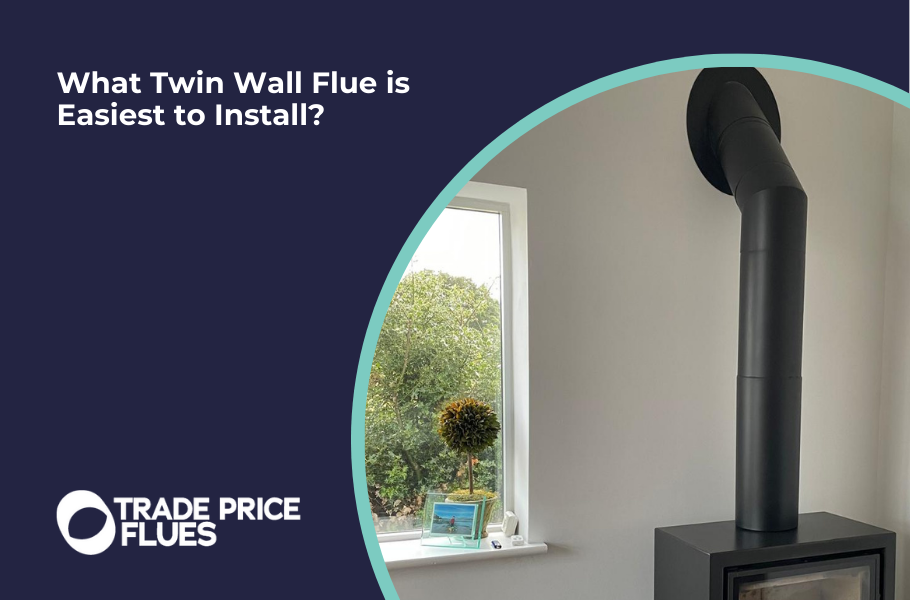
When installing a wood burner or multi-fuel stove, the flue system is one of the most important considerations. A quality twin-wall flue provides the optimum level of safety and performance. This article explores the key features to look for when selecting a twin wall flue system that is both high-performing and easy to install.
An introduction to twin wall flues
A twin wall flue system consists of an inner stainless steel liner surrounded by an outer casing, with a layer of insulation sandwiched between the two. This delivers a number of benefits over single-skin flue pipes:
- Excellent thermal efficiency: the insulating layer helps stabilise the temperature of the flue gases for optimum performance
- Cooler external temperature: keeping the outer wall cooler for safety
- Reduced condensation: limiting corrosion and staining on the outside of the flue
Twin wall flue systems are designed for use on multi-fuel stoves and wood burners operating under negative or non-condensing conditions. The construction allows them to reach the higher temperatures needed for burning wood versus fossil fuels.
When selecting a twin wall flue, key considerations include the quality of the components, ease of installation, insulation properties and ability to cope with thermal expansion.
Key features of an easy-to-install twin wall flue include:
Twist lock jointing
One of the most important features that make a twin wall flue system straightforward to install is the joining mechanism between flue sections.
The SFLUE twin wall flue utilises an advanced twist lock jointing design. Each section has a specially formed end with eight barbs. To secure in place, the flue pipes are simply twisted together with a firm action that allows the barbs to engage securely.
Once aligned, a locking band is wrapped around the joint and tightened. This neat twist and lock method delivers a rapid, secure installation without requiring additional fixings, sealant or tools.
The twist lock joints have undergone stringent testing. They are proven to safely support a maximum vertical flue height of 1.5 metres above the last support.
Flexibility
Another key ease of use feature is flexibility in routing options. SFLUE’s twin wall flue pipes are supplied as standard in 600mm lengths. Other lengths such as 900mm, 450mm, and 150mm are also available to provide total flexibility in planning the flue route.
There is also a comprehensive range of adapters, brackets, and terminals to facilitate routing around obstacles and reaching the planned exit point. Common components include 45 and 90 degree elbows, telescopic lengths, wall bands, ceiling plates and weatherproof terminals.
The broad range of twin wall fittings allows the flue system to be easily installed in the most appropriate route for the property layout.
Strong but lightweight construction
Twin wall flue systems need to stand up to high temperatures and potential corrosion from condensates over years of use. At the same time, the flue components must be reasonably lightweight for installers to handle.
SFLUE twin wall flues achieve this balance with a construction consisting of two layers:
- Inner liner: formed from 316L grade stainless steel, which offers excellent heat resistance and corrosion properties at high temperatures.
- Outer casing: made from a 304 grade stainless steel for high strength and long term durability.
Despite the robust metal construction, the flue sections are relatively lightweight at 16.8kg per metre. This ensures that positioning and joining sections during installation is manageable without specialist lifting equipment.
Insulation properties
The insulation layer between the two walls of a twin wall flue pipe is fundamental for performance and safety. This barrier helps stabilise the temperature of flue gases by retaining heat within the central liner.
Key technical considerations for flue insulation include:
- Insulation density: This determines the thickness and properties of the barrier between the inner liner and outer wall. A higher density above 150kg/m3 ensures maximum thermal performance.
- Conductivity: How effectively the insulation material conducts heat. A lower thermal conductivity keeps more heat energy inside the flue system.
- Distance to combustibles: The insulation layer allows the outer surface of the flue to be kept a safe distance away from any flammable materials surrounding the flue.
- Fire resistance: Prevents fire taking hold on the outside of the flue pipe in the event of excess heat escape.
The SFLUE twin wall flue system utilises a premium grade mineral wool insulation injected to a precise density between the two walls:
- Density of 250kg/m3 for rapid heat up and temperature stabilisation
- Thermal conductivity of 0.04 W/mK for minimising heat loss
- 50mm distance to combustibles
- 2 hour fire rating for complete peace of mind
- The high performance insulation enables reliable, efficient system operation
Coping with thermal expansion
One technical challenge of a rigid twin wall metal flue system is coping with thermal expansion.
As the flue gases heat up when the stove is lit, the metal expands. Without provision for expansion, this can potentially cause dangerous buckling or displacement of the flue pipes.
The SFLUE system overcomes this with an innovative joint design. The unique twist lock connection allows the inner liner an element of free movement to gently expand into the joint as temperatures increase.
This eliminates the need for additional special expansion components. The flue can smoothly adapt to thermal changes for complete safety.
Installation overview
Taking into account SFLUE’s well engineered design features for ease of installation, fitting an SFLUE twin wall flue system typically involves three key stages:
1. Planning the Flue Route
Survey the property layout and stove position to map the optimal flue routing to exit the building safely.
Select the required combination of 600mm straight pipes, elbows and adjustable sections to ensure the route can be formed.
2. Mounting and Connecting Flue Sections
Secure wall bands to the wall at appropriate intervals to support the flue route.
Construct the route section by section, using the twist and lock barbed joints to connect each piece.
Finish each joint with a tight locking band.
3. Weatherproofing
Install a ceiling plate trim where the flue passes through the roofline.
Terminate the flue safely with a certified SFLUE Storm cowl or cap.
Why Choose SFLUE?
When selecting a twin wall flue system, key factors include safety, performance and ease of installation.
As explored throughout this guide, the innovative features and proven reliability of the SFLUE twin wall flue system make it an excellent choice:
Safety
- High grade 316L inner liner and 304 outer casing
- Mineral wool insulation for 50mm combustible distance
- Fire-resistant construction
- Performance
- Twist lock joints support, 1500mm unsupported flue heights
- High density insulation for rapid heat-up and draught stability
- Ease of installation
- Lightweight twin-wall component design
- Twist lock jointing for fast assembly
- Wide range of accessories for flexible routing
Explore SFLUE products here.